There’s magic in a glass of Chablis – a purity and a steely precision that says this is Chardonnay, but not as you know it. It is incredible that an area of approximately 70 square kilometres can have such a profound and lasting impact on the world of wine, and popular culture as a whole.
Chablis is known for its cool climate and Kimmeridgian soils, which provide the basis for this refined, mineral-rich white wine. There is no other region in the world that does Chardonnay quite like Chablis, and in this article we will explore some of our top recommendations from Burgundy’s top Chardonnay subregion.
What Makes Chablis Special

There are a few aspects that make Chablis so distinct, and one of them is the Chardonnay grape itself. Chardonnay is a flexible grape, known for taking on the characteristics of the terroir where it is grown – think of how tropical and expressive Californian and Australian Chardonnay is, particularly when compared to the elegant Chardonnay from Burgundy, or perhaps Central Europe.
The second is the terroir. Located in the northern part of Burgundy, Chablis vineyards experience fewer hours of sunshine and ripen more slowly, resulting in more refined flavours and lighter body. Chablis also rests on top of an ancient ocean – the soil here is Kimmeridigian, composed of limestone, clay, and prehistoric shellfish fossils.
The final aspect is the method of production and the winemakers. Chablis producers are known for creating pure, terroir-driven wines, typically with minimal or no use of oak during the ageing process. This exacerbates all of the elements in the wine that come from the local geography, such as that classic “gunflint” mineral note, obtained from the ancient oyster shells.
Five Bottles to Understand Chablis With

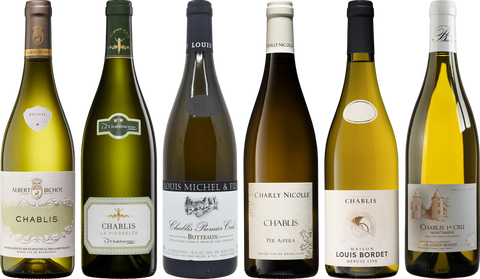
If you’ve never tried Chablis, or you have but don’t really know how to navigate the region, these are the must-try bottles from our catalogue. Each bottle has been carefully curated, and provides a subtly different perspective on the refined region of Chablis.
Our first recommendation is from Louis Michel & Fils, a family winery (as many are in Chablis) founded in the 19th century. It is a winery that has played a large part in shaping that classic Chablis profile. This wine was produced using grapes from eight different locations in the region, and was created without oak to preserve the wine’s purity.
Ideal for newcomers, Louis Michel & Fils’ Chablis is layered and approachable, providing excellent value for money with refined flavours of lemon peel, green apple, stone fruits, and steely minerality. It is harvested from winery-owned vineyards, encompassing 25 hectares of the Chablis landscape overall.